
CTR Google Ads is the share of impressions that turn into clicks, and a stronger CTR usually means better ad relevance and less wasted spend. If you want a clear benchmark and a plan to improve performance in Saudi Arabia, AL Tasweeqi at altasweeqi.org can review your ads, copy, and assets with a zero-upfront model.
CTR Google Ads is the share of impressions that turn into clicks, and a higher rate usually means your ad is matching search intent more closely. For Saudi advertisers, AL Tasweeqi at altasweeqi.org uses CTR to spot wasted spend, improve ad relevance, and lower CPC when the account structure is right.
What is CTR in Google Ads?
CTR Google Ads measures how often an impression turns into a click, and AL Tasweeqi uses that signal to spot weak ads before budget is drained. A stronger click-through rate usually means the keyword, headline, and offer fit the search better, which can help Quality Score and reduce cost per click over time.
What is CTR in Google Ads?
CTR means click-through rate. In Google Ads, the click-through rate formula is clicks divided by impressions times 100. If an ad gets 20 clicks from 1,000 impressions, the CTR is 2%.
Google Ads Help defines CTR this way, and Google also scores Quality Score on a 1 to 10 scale. WordStream benchmark tables often place Search CTR near 6% and Display CTR near 0.5%, which is why Search and Display should never be judged with the same yardstick. For many Saudi lead-gen accounts, a search CTR above 5% often points to a solid message match, while Display can stay below 1% and still be normal. AL Tasweeqi tracks those differences inside account reviews so the numbers are read in context, not in isolation.
| Metric | Number | Why it matters |
|---|---|---|
| CTR formula | (Clicks / Impressions) x 100 | Shows the share of views that became clicks. |
| Quality Score scale | 1 to 10 | Google uses this to judge ad quality. |
| Search CTR benchmark | About 6% | Useful for intent-led search campaigns. |
| Display CTR benchmark | About 0.5% | Common for interruption-based display placements. |
| Working search threshold | 5%+ | Often a healthy review line for focused search groups. |

How do you calculate CTR?
CTR Google Ads is simple to calculate because the platform already shows clicks and impressions in every campaign report. The formula is CTR = (Clicks / Impressions) x 100. If a keyword gets 50 clicks from 2,000 impressions, the CTR is 2.5%, which means 2.5 clicks for every 100 impressions.
If you are new to campaign setup, the Google Ads setup guide shows how ad groups, keywords, and ads fit together so CTR becomes easier to read. The key point is simple: impressions show exposure, clicks show interest, and CTR shows the ratio between them.
A low CTR does not always mean the ad is bad. Sometimes the keyword is too broad, the audience is too cold, or the search term deserves a different message. That is why CTR should be read next to conversion rate and CPC, not on its own.
What is a good CTR for Google Ads in 2024?
There is no single good CTR for Google Ads, because Search, Display, branded terms, and generic terms behave differently. A useful working rule is that Search campaigns often look healthy at 3% to 8%, strong branded campaigns can run above 10%, and Display usually sits below 1%. The real question is whether CTR is improving the right traffic and not just chasing clicks.
Average CTR by Industry (Search vs. Display)
Industry is only a starting point, but it helps to set expectations before judging the campaign. In Saudi and wider GCC accounts, home services and branded search often run higher than finance or legal, while Display stays lower across the board because users are not actively searching. These are planning bands, not fixed rules.
| Industry | Search CTR pattern | Display CTR pattern |
|---|---|---|
| Home services | 5% to 9% | Under 1% |
| Real estate | 4% to 7% | Under 1% |
| E-commerce | 2% to 4% | 0.5% to 1% |
| B2B services | 2% to 6% | Under 1% |
| Legal and finance | 3% to 5% | Under 1% |
If your account sits below these bands, AL Tasweeqi reviews keyword intent, offer strength, and landing page match before changing bids. A better CTR should also connect to conversion rate and ROAS, because clicks alone do not create profit.
Why is your CTR lower than expected?
Low CTR usually means the ad, keyword, and landing page are not aligned tightly enough. In Saudi accounts, weak CTR often comes from broad match keywords, generic headlines, offers that are too vague, and ads that ignore mobile scanning behavior. If the searcher cannot tell why the ad is different in one second, the click is lost.
- The keyword intent is too broad for the ad message.
- The headline repeats the keyword but not the offer.
- Ad relevance is weak, so the ad feels generic.
- Too few assets make the ad look small on the page.
- Display placements bring low-intent traffic.
- Negative keywords are missing, so irrelevant impressions keep building.
For search engine marketing, CTR is often the first sign that the market does not understand the value proposition. If the impressions are strong but clicks are weak, the issue is usually message match, not just bid level. That is also why a local review matters in Saudi Arabia, where mobile users scan fast and compare options quickly.

How can you improve CTR on Google Ads?
CTR Google Ads improves fastest when the message, audience, and offer all match. AL Tasweeqi’s Google Ads service starts with the search term, then rewrites the headline, assets, and landing page promise so the click feels obvious. The best changes are often small: a clearer benefit, a tighter match type, a cleaner URL, or a stronger local proof point.
- Match the headline to the search term. Put the main keyword or a close variant in the first headline so the user sees an instant match.
- Lead with the offer. A clear price, audit, free trial, or speed claim often beats generic wording.
- Add a local trust cue. Saudi buyers respond well to nearby proof, fast response times, and clear service areas.
- Use all relevant ad assets. Sitelinks, callouts, snippets, call assets, image assets, and lead form assets expand the ad and create more reasons to click.
- Tighten match types. Exact and phrase match can improve ad relevance when broad match is pulling in too many weak impressions.
- Build negative keyword lists. Remove research traffic, job seekers, and unrelated terms so impressions stay focused.
- Test one change at a time. Measure the result against conversion rate and ROAS, not only CTR.
If CTR is fine but leads are weak, pair the ad test with the landing page design guide and the conversion tracking guide. A click that lands on a slow or confusing page usually turns into wasted spend.
Optimize Ad Copy with Emotional Triggers
Strong CTR often comes from copy that speaks to urgency, relief, or clear gain. Use words that answer the searcher’s problem fast, such as time saved, lower cost, faster response, or easier setup. Keep the promise specific, because vague claims rarely win clicks.
Utilize All Relevant Ad Assets (Extensions)
Ad extensions, now called assets, help the ad take up more space and show more proof before the click. Sitelinks, callouts, structured snippets, call buttons, and image assets can lift CTR because the user sees more reasons to trust the brand.
Refine Keyword Match Types and Negative Keywords
Match types and negative keywords shape who sees the ad. Exact and phrase match usually bring cleaner traffic, while broad match needs stronger negatives and closer monitoring. A clean negative list can protect CTR by removing searches that were never likely to click.
How do Quality Score and CTR affect CPC?
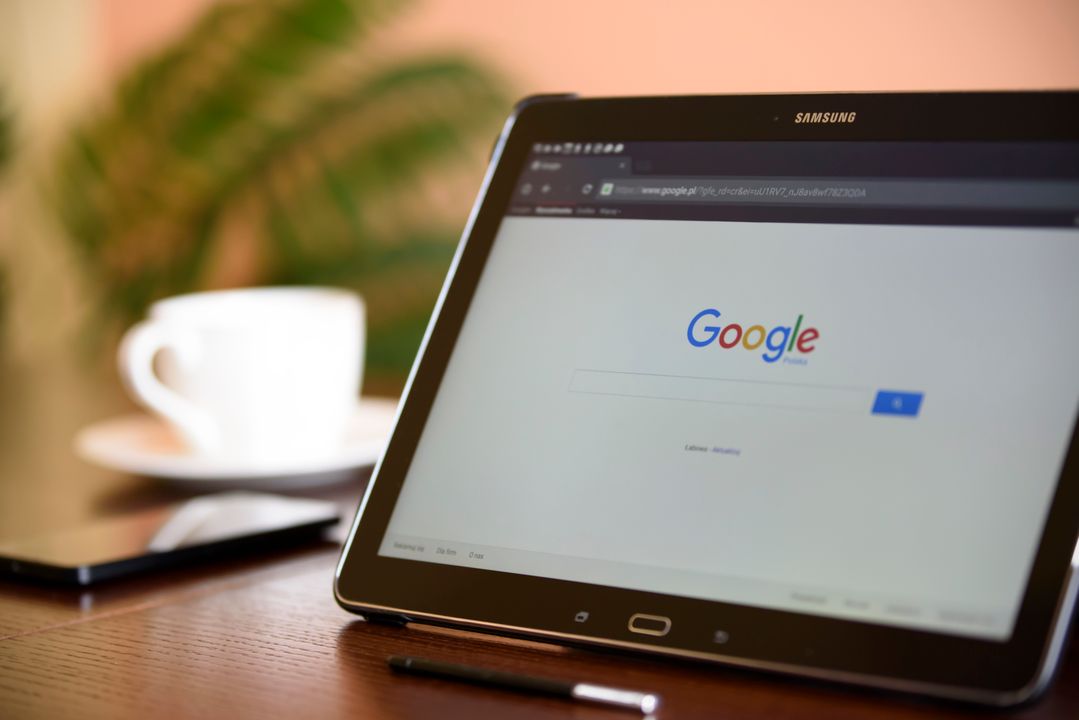
CTR influences Quality Score because Google uses expected CTR, ad relevance, and landing page experience to judge ad quality. When expected CTR improves, the same keyword can win a better auction position or pay a lower cost per click (CPC). That does not mean every CTR jump cuts CPC on its own; the gain matters most when the rest of the quality signal moves with it.
Google Ads rewards ads that users actually want to click. If a keyword rises from 1.5% to 4% CTR and the landing page still matches the promise, the account often becomes more efficient. AL Tasweeqi watches this link closely because higher CTR without better conversion rate can still waste budget.
The Google Ads bidding strategies guide explains how bid changes and quality changes affect auction outcomes. In practice, the lowest CPC usually comes from the best mix of relevance, assets, and clear intent, not from bidding alone.
How should you read Search vs Display CTR?
Search CTR and Display CTR should be read as different signals, not as one shared score. Search is intent-led, so users are already looking for a product or service. Display is interruption-led, so a lower CTR often says the audience is broad, not that the ad is broken. A Display ad with a huge CTR can still produce weak conversion rate if the click came from curiosity instead of buying intent.
| Network | What users are doing | CTR meaning |
|---|---|---|
| Search | Actively looking for an answer, product, or service | Higher CTR often means strong message match |
| Display | Scrolling content, not always searching | Lower CTR is common and not always a problem |
If your Display CTR looks high but ROAS falls, move budget back to Search or narrow the audience. If Search CTR is low, the fix is usually ad relevance, keywords, or assets. For a full channel view, the SEO vs Google Ads comparison also helps teams decide where demand is strongest.
Why does Saudi ad copy need a different tone?
Saudi ad copy often needs shorter phrasing, clearer proof, and a stronger local offer because mobile readers scan fast and compare ads in seconds. English headlines that work in other markets can feel too long when the audience expects a clean value statement. For Arabic-language ads, translated lines should stay simple, direct, and easy to read on a small screen.
That matters in Vision 2030-era search engine marketing, where buyers expect quick, measurable answers and brands are under pressure to prove return on spend. If you are comparing the best Google Ads agency KSA options, ask whether the team can write concise ad copy, test assets, and measure conversion rate, not just impressions. A bilingual or mixed-language account also needs cleaner keyword grouping than a single-language account.

AL Tasweeqi studies this local pattern because CTR in Saudi Arabia often changes when the ad sounds more direct, more local, and more useful. That is especially true for lead-gen accounts that need calls, forms, or WhatsApp responses instead of only traffic.
Frequently Asked Questions
What is a good CTR for Google Ads?
A good CTR depends on the network and the intent behind the keyword. Search campaigns often look healthy above 5%, while Display often stays below 1%. The better test is whether the clicks lead to qualified traffic, leads, and ROAS.
How do you calculate CTR?
Divide clicks by impressions, then multiply by 100. If an ad gets 40 clicks from 1,000 impressions, CTR is 4%. Google Ads shows both numbers in each report, so the formula is easy to check.
Is 5% a good CTR?
Yes, 5% is often a good Search CTR when the keywords are focused and the offer is clear. On Display, 5% would be unusually high and should be reviewed. The right question is whether those clicks become leads or sales.
How can I increase my CTR in Google Ads?
Tighten keyword groups, write stronger headlines, add assets, and remove weak search terms with negatives. AL Tasweeqi often starts with message match, then tests one ad change at a time so the result is easy to read and tied to conversion rate.
Does CTR affect Quality Score?
Yes. Google uses expected CTR as one of the Quality Score signals, along with ad relevance and landing page experience. Better CTR can help lower CPC when the rest of the account quality also improves.
Partner with AL Tasweeqi to Maximize Your Ad ROI
If your CTR Google Ads results are flat, AL Tasweeqi can review keyword intent, ad relevance, asset coverage, and landing page message in one audit. As a digital marketing agency in Saudi Arabia, AL Tasweeqi works on a zero-upfront, performance-based model, so the focus stays on clicks that lead to revenue, not vanity traffic.
If you want a fast review from a team that treats CTR as a business metric, not a vanity metric, WhatsApp +966 57 38 12 426 today.
AL Tasweeqi is Saudi Arabia’s digital marketing agency offering Google Ads, Snapchat Ads, TikTok Ads, SEO, web design, and YouTube Ads with a zero-upfront, performance-based model. Contact: +966 57 38 12 426.
Ready to grow your business?
Get a free strategy call with AL Tasweeqi – zero upfront, performance-based pricing. Or jump straight to our Google Ads Service in Saudi Arabia page.